
The Real Cost of Facility Downtime, and How to Reduce It


Unplanned downtime affects profitability, safety, and operational performance. When electrical maintenance remains reactive, facilities face significant downtime risks from unexpected outages or shutdowns for required repairs. They may lose production capacity, delay shipments, increase overtime, create safety risk, and need to divert resources away from higher-value operational priorities.
The scale of downtime is significant. According to industry data gathered for Pulse360, Interstates’ multi-year electrical maintenance program, global manufacturers lose approximately 11% of revenue due to unplanned downtime*, with 60% of manufacturers reporting annual losses exceeding $250,000**. Typical facilities experience around 360 hours of downtime annually**, and larger plants can see downtime losses reach hundreds of millions of dollars each year.
However, downtime can be predictable, measurable, and largely preventable when facilities take a more structured approach to electrical maintenance.
That is the idea behind Pulse360, a multi-year, structured maintenance program developed by Interstates, built on NFPA 70B guidance, and supporting NFPA 70E safe work practices. Pulse360 helps industrial facilities move from reactive, one-off maintenance to a structured, condition-informed plan that helps reduce safety risk, lower downtime likelihood, and support more reliable operations.
Downtime Goes Beyond Lost Production
The cost of downtime is easy to underestimate because many teams focus only on immediate production loss.
Direct downtime costs also include lost revenue, emergency repair expenses, added contractor costs, and overtime labor. Indirect costs encompass missed delivery commitments, quality issues, reduced employee morale, and the added pressure placed on maintenance and operations teams. In some cases, downtime also slows decision-making, delays capacity expansion, and pulls resources away from long-term improvement efforts.
According to Corey Hoffman, Project Executive at Interstates, “When downtime happens, the impact usually reaches further than the equipment that failed. It affects production, scheduling, safety, and the team’s ability to focus on planned work. A structured program helps clients understand where risk is building before it turns into a larger operational issue.”
The Cost of Inaction
Without a structured approach, these challenges tend to persist. Maintenance remains reactive, documentation gaps continue, and electrical risk is difficult to prioritize. Over time, these issues compound—leading to recurring downtime, increased safety exposure, and a growing reliance on emergency repairs instead of planned work.
The result is not a single failure, but an ongoing pattern of inefficiency, avoidable disruption, and rising operational risk.
From Reactive Maintenance to a Structured Program
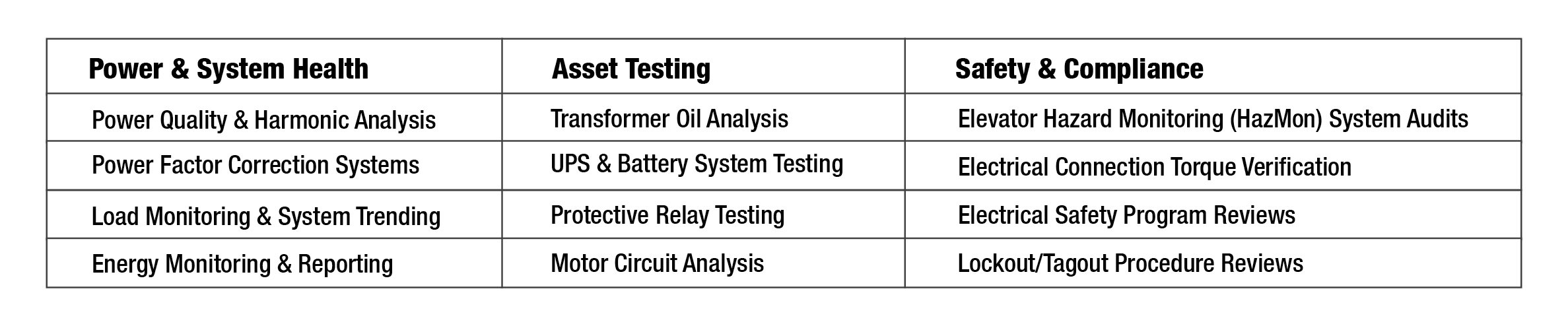
Many facilities are still managing electrical maintenance reactively. In fact, 67% of organizations continue to operate under reactive maintenance models, and 40% lack consistent downtime tracking systems**. That lack of structure makes it harder to see patterns, prioritize risk, and make informed decisions about asset health.
Pulse360 was built to help close that gap. The program begins with a full-facility assessment to establish a baseline of current maintenance activities, documentation, and asset condition. From there, Interstates helps create a prioritized, multi-year roadmap informed by equipment condition, asset criticality, operating environment, manufacturer guidance, and NFPA 70B guidance.
The goal is not to eliminate downtime entirely, as planned downtime will always be part of industrial operations. The goal of Pulse360 is to reduce the likelihood of unplanned downtime by converting more maintenance into planned, controlled, and better-coordinated activities.
“Typically, facilities are performing some of the right maintenance activities, but not always in a connected way,” says Hoffman. “Pulse360 brings those activities into a clearer roadmap so teams can better understand what needs to happen, when it should happen, and how it can align with planned shutdowns to minimize downtime windows.”
The Pulse360 Experience
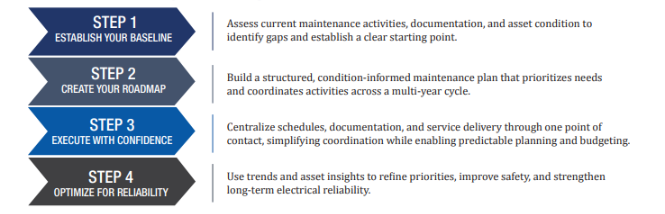
Pulse360 follows a four-phase lifecycle: assess, prioritize, execute, and optimize. This structure helps facilities move from uncertainty to a more confident, proactive operating model.
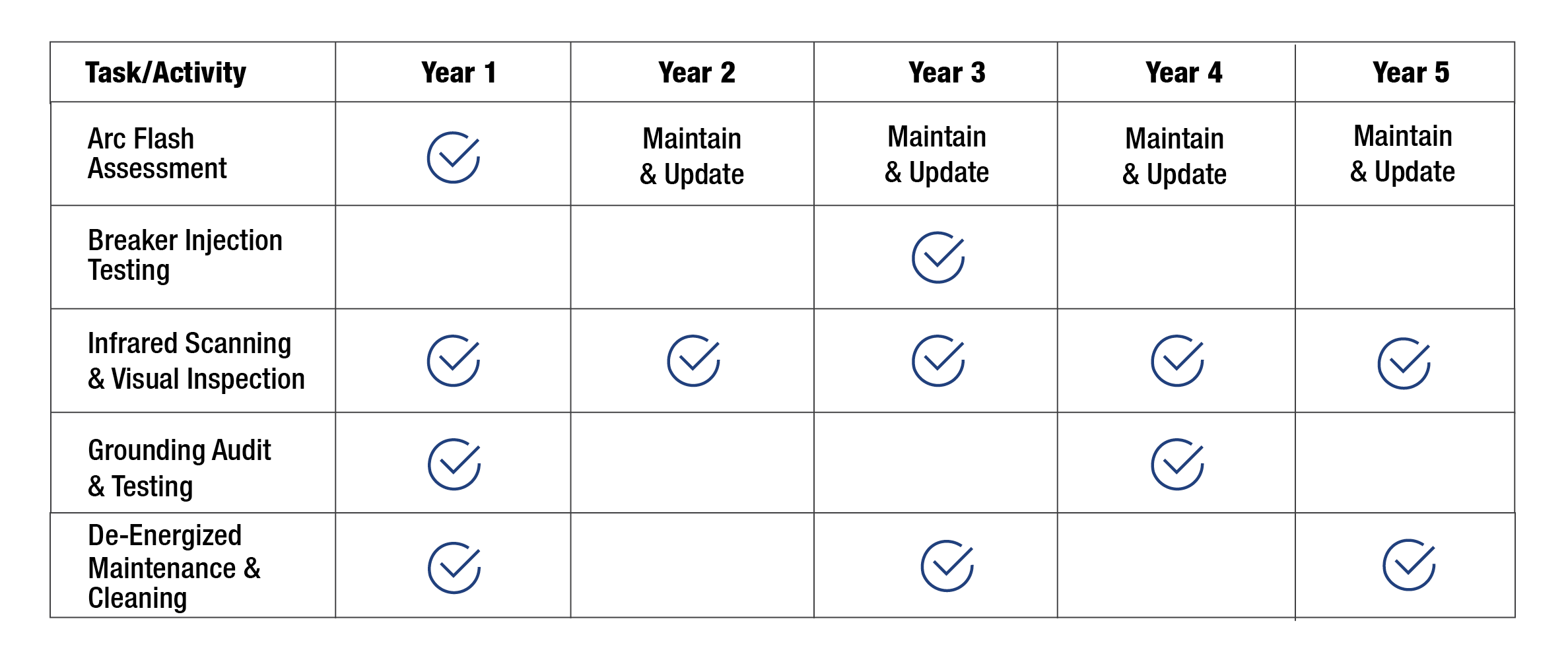
During the assessment phase, Interstates reviews current maintenance activities, system condition, documentation, and potential areas of risk. This may include arc flash updates, breaker testing, infrared scanning, grounding audits, inspections, and other evaluations, depending on the facility’s needs.
From there, the team builds a roadmap that helps prioritize the right maintenance activities over a multi-year period. Maintenance is then coordinated around planned downtime windows when possible, helping reduce disruption and improve budget predictability.
Jack Lembcke, Field Analyst II at Interstates, says, “When we walk a facility, we’re not just looking at whether equipment is working today. We’re looking at condition, maintainability, documentation, and what the client may need to plan for in the future. That information helps build a more practical maintenance path moving forward.”
What Changes with Pulse360
When facilities adopt a structured maintenance program, the shift goes beyond completing individual maintenance tasks. Instead of reactive work and disconnected activities, maintenance becomes coordinated, prioritized, and aligned with actual system risk.
Facilities gain clearer visibility into asset condition, better coordination across teams and vendors, and a more predictable approach to planning downtime. Documentation improves, decision-making becomes more informed, and maintenance activities are aligned to long-term operational goals rather than immediate issues.
Year 1 Impact
In the first year of implementing Pulse360, most facilities see value in identifying previously unknown gaps in maintenance coverage, prioritizing the highest-risk assets, and improving coordination across maintenance activities.
Teams often reduce reliance on emergency work, gain better visibility into system condition, and establish a clearer, more actionable maintenance roadmap. These early improvements create the foundation for longer-term gains in reliability, safety, and operational performance.
The Benefits of a Data-Driven Electrical Maintenance Program
Besides the obvious importance of safety, there are many reasons to pursue an electrical maintenance program with an experienced provider like Interstates.
Some of the main benefits include:
- Identifying weak points in the electrical system before they create larger safety or reliability risks.
- Reducing the likelihood of unplanned outages by addressing issues earlier.
- Improving visibility into which sites, systems, or assets need attention first.
- Supporting more predictable maintenance budgets through a multi-year roadmap.
- Coordinating work during planned downtime windows to reduce disruption.
- Maintaining clearer documentation and reporting to support compliance-readiness efforts.
- Helping internal teams reduce the burden of coordinating multiple vendors, schedules, and workflows.
Brian Tepe, Field Analyst II at Interstates, says, “One of the advantages Interstates brings is that we can help identify issues and support next steps. We have electrical, engineering, automation, and field resources that can help clients move from findings to action instead of handing over a report without a clear path forward.”

One Partner for Long-Term Reliability
True, sustainable downtime reduction requires a structured program, clear documentation, consistent execution, and one accountable partner to help coordinate the work.
Pulse360 gives clients that structure. Interstates serves as the single point of accountability for planning, execution, reporting, and program communication. The program can also coordinate work across Interstates services and qualified third parties when needed, while maintaining one front door for the client.
This does not mean every facility has to outsource every maintenance task. Pulse360 is designed to scale and adapt. Clients can keep selected work in-house while relying on Interstates to help make the overall program successful.
Lembcke sums it up this way: “When electrical maintenance, grounding, arc flash work, and condition evaluations are connected through one program, clients get a clearer picture of their electrical system. That supports better reliability, better planning, and safer operation over time.”
Turning Downtime into a Manageable Risk
Downtime will always carry cost, but it does not have to remain unpredictable.
Facilities that continue operating with loosely coordinated maintenance often experience recurring disruptions, inconsistent documentation, and limited visibility into where risk is building. Those who take a structured approach can gain clearer insight into electrical risk, a prioritized plan, and more controlled execution.
The question is not whether your facility is performing maintenance. It’s whether that maintenance is coordinated, prioritized, and aligned to the actual risks in your system.
Pulse360 was built to help facilities make that shift.
* Siemens. (2024). The true cost of downtime 2024.
** L2L. (2025). Beyond breakdowns: The real impact of manufacturing downtime.